Six major trends in the international fertilizer market in 2026: Besides price, what do global buyers pay more attention to?
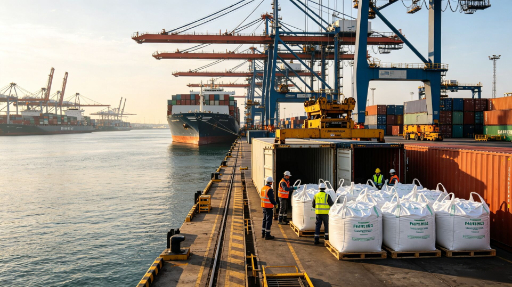
In the international fertilizer market in 2026, the factor that determines whether a transaction can actually be implemented is no longer just the price per ton. Energy costs, raw material supply, export policies, international transportation, product registration and payment risks can all change the enforceability of an offer.
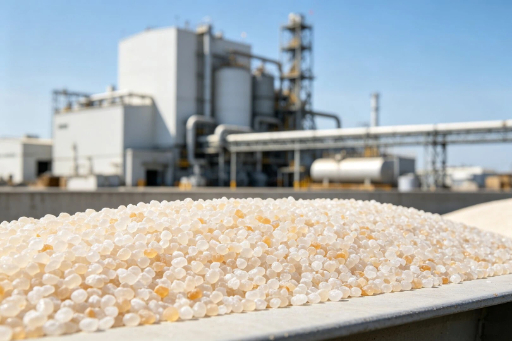
For importers, distributors, compounding plants and agricultural input companies, the truly valuable question is no longer just “what is the lowest price”, but: whether the product specifications match, whether the supply is stable, whether the packaging is suitable for local sales, whether the documentation is complete, whether the destination country can import, and whether the final landed cost is competitive.
The following six trends are affecting international fertilizer trade and procurement decisions in 2026.
## 1. The nitrogen fertilizer market is still highly sensitive to energy and trade conditions
The supply and price of urea, ammonium sulfate and other nitrogen fertilizer products are often affected by the supply of natural gas and synthetic ammonia, the operating rate of production units, domestic demand and trade policies. Even if several products can provide nitrogen to crops, their specifications, applications and international supply rhythms can be completely different.
When comparing nitrogen fertilizer quotes, importers should ensure that all suppliers are using the same terms:
- Nitrogen, sulfur and other key indicators;
- Large particles, small particles, crystal or powder form;
- Quality requirements such as particle size, biuret, and moisture;
- Packed in 25kg, 50kg or ton bags;
- FOB, CFR or CIF trade terms;
- Quotation validity period and expected shipment month;
- Products and customs clearance documents required by the destination country.
Without clear quantity, packaging and destination port, a seemingly attractive unit price cannot usually be considered an executable offer.
## 2. Phosphate fertilizer procurement needs to be planned earlier
Although DAP, MAP and water-soluble phosphate fertilizers are all phosphate fertilizer products, they cannot simply replace each other. Total nutrients, water-soluble phosphorus ratio, product grade, application method and destination country registration requirements will all influence purchasing choices.
Phosphate fertilizer buyers should clarify the following before making inquiries:
- Required nitrogen, phosphorus and potassium formula;
- Total phosphorus and water-soluble phosphorus requirements;
- Agricultural grade, industrial grade or water-soluble grade;
- for direct application, compounding or drip irrigation;
- Product registration and labeling requirements;
- Target purchasing and shipping months.
In some markets, it takes a long time to process import licenses, fertilizer registration or administrative approvals. If you wait until the peak fertilizer season to start checking documents, you may miss the purchase window even if the product and price are suitable.
## 3. Potassium fertilizer selection increasingly depends on crop demand and logistics conditions
Although potassium chloride (MOP), potassium sulfate (SOP) and potassium nitrate can all provide potassium, their chlorine content, solubility, nutrient combination, application scenarios and transportation requirements are different.
Potassium chloride is a common source of potassium in the international market; potassium sulfate is often used in applications with more stringent requirements for chlorine content; potassium nitrate provides both nitrogen and potassium, but requires separate verification of SDS, transportation condition identification and carrier requirements.
Buyers should not make decisions based solely on the product name. Every purchase should be checked:
- Actual batch COA;
- Product TDS and SDS;
- Chlorine content and detection methods;
- Water solubility and insoluble matter indicators;
- Transportation classification;
- Destination country registration and labeling requirements.
Especially nitrate products should not be directly judged as ordinary goods without specific composition and transportation identification.
## 4. International shipping and packaging are becoming part of product strategy
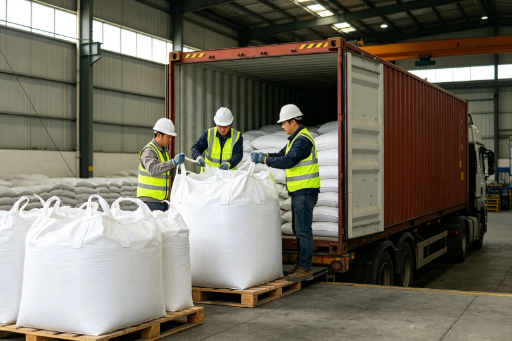
For many international buyers, packaging and logistics have become important factors in determining whether a purchase is profitable. Lower factory prices may be offset by packaging not suitable for local channels, lower container utilization, port restrictions or expensive inland transportation.
Common choices include:
- Small packages of 25kg or 50kg, suitable for distribution and retail channels;
- Ton bag packaging, suitable for compounding plants and large agricultural customers;
- Full container transportation, LCL transportation or larger bulk cargo transportation;
- Ordinary packaging or customized printed packaging;
- Tray, moisture-proof inner film and special mark;
- Unloading and warehousing capabilities at the destination port.
The most suitable packaging solution depends on local sales patterns, labor costs, warehousing conditions and import infrastructure, rather than the more elaborate the packaging, the better.
## 5. Demand for special fertilizers and customized products continues to increase
In addition to traditional bulk fertilizers, products such as water-soluble NPK, trace element fertilizers, humic acid, seaweed extracts and controlled-release fertilizers are increasingly appearing in international inquiries. These products usually have higher added value, but also require more stringent technical data and compliance management.
When purchasing special fertilizers, you should focus on confirming:
- What testing methods are used for nutrient content;
- Whether there is a test basis for solubility and insoluble matter;
- Whether liquid and powder products have SDS respectively;
- Whether organic certification is applicable to specific companies, products and markets;
- Whether the destination country requires product registration;
- Whether the efficacy claims are supported by experimental or technical evidence;
- Minimum order quantity and production lead time for customized recipes.
Custom fertilizer should not start with a generic ingredient list, but with the target market, crop needs, price range, registration standards and competitive product specifications.
## What should international buyers do next?
In the context of frequent market fluctuations and policy changes, a stable and efficient procurement process should include:
1. Clarify product name, grade and contract specifications;
2. Verify the import and registration requirements of the destination country in advance;
3. Provide true commercial quantity, packaging and destination port;
4. Compare different quotes using the same trade terms;
5. Check COA, TDS, SDS and shipping conditions;
6. Independently verify the contracting company and collection account;
7. Reserve sufficient time for production, booking, inspection and customs clearance;
8. Set clear expiration dates on prices, shipping rates, inventory, and policies.
## Obtain executable fertilizer export quotations
Horizon Fertilizer supports international customers with fertilizer supply coordination, export packaging, product documentation and international shipping solutions.
To obtain an FOB, CFR or CIF quote, please provide:
- Product and target specifications;
- Purchase quantity;
- Packaging requirements;
- port of destination;
- Estimated shipment month;
- Company name and business email.
> Disclaimer: This article is only used as general market information and does not constitute price quotations, agronomic suggestions, customs declaration opinions or regulatory conclusions. Product availability, export conditions, international shipping charges, destination country registration and shipping classification should be re-verified on a transaction-specific basis.