The Complete Guide to Water-Soluble Fertilizer (WSF): The Definitive Guide to Modern Plant Nutrition
introduction
In the pursuit of maximizing crop yields and improving farm efficiency, the traditional “spread it and let it happen” approach to fertilization is rapidly becoming obsolete. Water-Soluble Fertilizer (WSF) emerged and is the cornerstone of precision agriculture and modern plant nutrition.
Whether you are a large, modern farm pursuing high yields, or a horticultural enterprise committed to precision cultivation, understanding WSF is no longer optional – it is the only way to achieve sustainable, high-yielding cultivation.
But what exactly is water-soluble fertilizer, and why is it revolutionizing the industry? This guide will provide the answers.
What is water-soluble fertilizer (WSF)?
At its simplest, a water-soluble fertilizer is a multi-nutrient fertilizer that is completely soluble in water.
Since they are completely dissolved in water, nutrients (macro and trace elements) are in an ionic state, in a form that can be immediately absorbed by plants. Whether through their roots or directly through their leaves, WSFs provide “instant food” that defines their central role in modern agriculture.
Water Soluble Fertilizer vs. Traditional Granular Fertilizer: Why is WSF Better?
The difference between water-soluble fertilizer and traditional granular products is fundamental, which not only affects the application method, but also directly affects nutrient use efficiency. The comparison of key features between the two is as follows:
Solubility difference:
Water Soluble Fertilizer (WSF): Instantly and completely dissolves without residue.
Granular Fertilizer: Dissolves slowly, highly dependent on soil moisture and temperature, may take weeks.
Nutrient absorption rate:
Water-Soluble Fertilizer (WSF): Absorbed immediately, nutrients are usually available to plants within minutes to hours of application.
Granular Fertilizer: Delayed absorption, must wait until the granules dissolve and spread in the soil solution, usually days to weeks.
Application method:
Water Soluble Fertilizer (WSF): Extremely flexible. Suitable for drip irrigation/sprinkler irrigation systems (integrated water and fertilizer) and foliar spraying.
Granular fertilizer: Mainly used for soil broadcasting, mechanical adjustment or basal fertilizer strip application.
Nutritional Accuracy:
Water Soluble Fertilizer (WSF): Very high. The nutrient ratio can be precisely formulated as needed, and the dosage can be precisely controlled to ensure that each crop receives uniform nutrition.
Granular Fertilizer: Medium. Nutrient release depends on the uniformity of particle distribution and soil environment, and it is difficult to achieve plant-to-plant accuracy.
Key advantages of using water-soluble fertilizers
The rapid adoption of WSF is driven by five powerful benefits that directly impact grower profits and sustainability goals:
1. Maximize Nutrient Utilization Efficiency (NUE)
Conventional fertilizers suffer from nutrient losses due to rain washout (to groundwater) and losses due to excessive volatilization (to the atmosphere). WSF delivers nutrients directly and precisely through water to the areas where roots are most concentrated, minimizing runoff and waste. This high efficiency means you can use less fertilizer to achieve the same or better results.
2. Rapid and predictable plant response
Because WSF's nutrients take effect immediately, growers can see a quick visual response—greener leaves, accelerated growth or stronger flowers. This predictability allows growers to make precise nutritional interventions during different growth stages of the crop (e.g., flower bud differentiation, fruit enlargement), which is critical for optimizing yields and timing the market.
3. Seamless integration with modern technology (water and fertilizer integration)
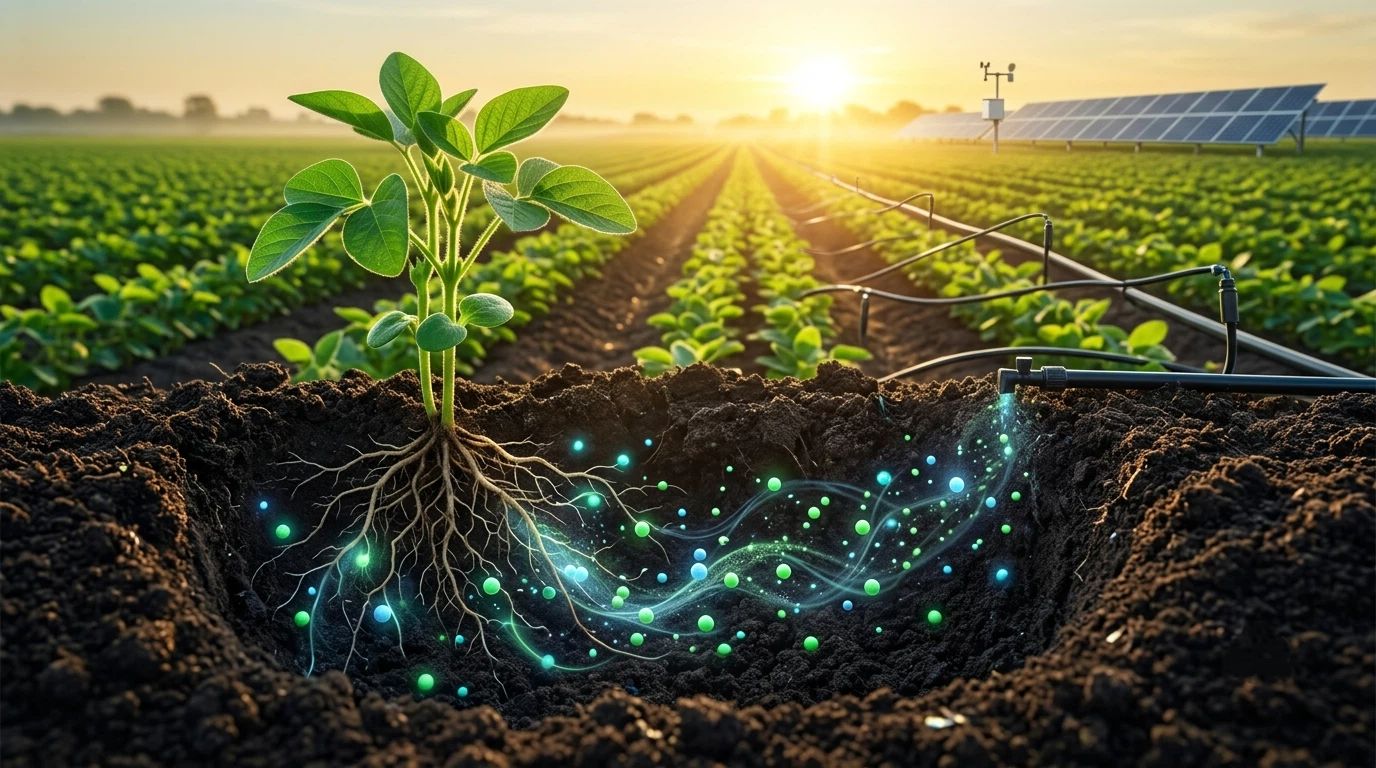
WSF is designed for fertigation – the simultaneous application of fertilizers via modern irrigation systems (drip, sprinkler or micro-sprinkler). The integration of water and fertilizer realizes the automation and intelligence of the labor-intensive process of fertilization, significantly reducing labor costs.
4. Foliar top dressing ability
Many advanced WSF formulations can be applied as a fine mist for foliar application. This technology completely bypasses the root system (for example, when low soil temperatures or drought lead to reduced root absorptive capacity) and can directly replenish trace elements (such as iron, zinc) or provide an overall boost to the plant during critical growth windows.
5. Lower environmental footprint
The reduction in waste associated with precise application means less leaching of nutrients into groundwater and lower overall environmental stress, which is well in line with ESG concepts and sustainable agricultural practices promoted globally.
Core types of water-soluble fertilizers
Water-soluble fertilizers are not cookie-cutter, they are specially formulated for specific crops, soils and growth stages:
Water Soluble NPK Formula:
This is the most basic type and contains the main macronutrients: nitrogen (N), phosphorus (P) and potassium (K). By precisely adjusting the N-P-K ratio, fertilizers can be customized to suit different needs, such as:
General Balanced (e.g. 20-20-20): Suitable for early growth stages and overall nutritional maintenance of most crops.
High phosphorus type (such as 10-52-10): used to initiate rooting and promote flower bud differentiation.
High potassium type (such as 15-15-30): used to promote fruit enlargement, improve quality and color.
Water-soluble trace elements:
Many crops not only require large amounts of elements, but also have critical needs for trace elements such as iron (Fe), manganese (Mn), zinc (Zn), and boron (B). These trace elements are usually formulated in a chelated state (Chelated) to make them stable and effective under different soil pH values.
Special formula:
Advanced WSF may include biostimulants, amino acids, fulvic acid, and other ingredients designed to further enhance plant stress resistance, increase nutrient uptake, and improve the soil environment.
How to properly apply WSF: a best practice guide
The effectiveness of water-soluble fertilizers depends on precise application methods. The two most commonly used methods are:
Drip Irrigation / Fertigation:
This is an ideal method for modernizing large farms and greenhouses. The nutrient solution is dissolved in a fertilizer tank and delivered slowly and evenly through a drip network to the root zone of each plant. Tip: Be sure to use a high-quality filter and clean it regularly to prevent incompletely dissolved tiny impurities from clogging the dripper.
Foliar Spraying:
Dilute WSF to a certain multiple and spray it on crop leaves using a sprayer. Tip: Spraying should be avoided under the scorching sun at noon or at high temperatures. The best time is in the early morning (after the dew has dried) or in the evening, because the stomata of the leaves are more active at this time, which is conducive to absorption and is less likely to cause phytotoxicity.
Security Tip: "Accuracy" is at the core of WSF. Always read product instructions before application and strictly follow the manufacturer's recommended dilution rate and frequency of application. Although WSF is easily absorbed, application at too high a concentration can easily cause nutrient burn (leaf burn).
in conclusion
Water-soluble fertilizers are more than just a convenience; they are a strategic tool for increasing productivity while being environmentally responsible. By delivering precise, immediate and efficient nutrition, WSF technology empowers modern agriculture to meet the needs of a growing world.
For growers looking to optimize yields, increase resource efficiency and reduce their carbon footprint, integrating a proven water-soluble fertilizer program into current farming patterns is the next logical step.